
New Research Validates Effectiveness of Industry-Led Penguin Protection Zones
Science Confirms VRZ Efficiency
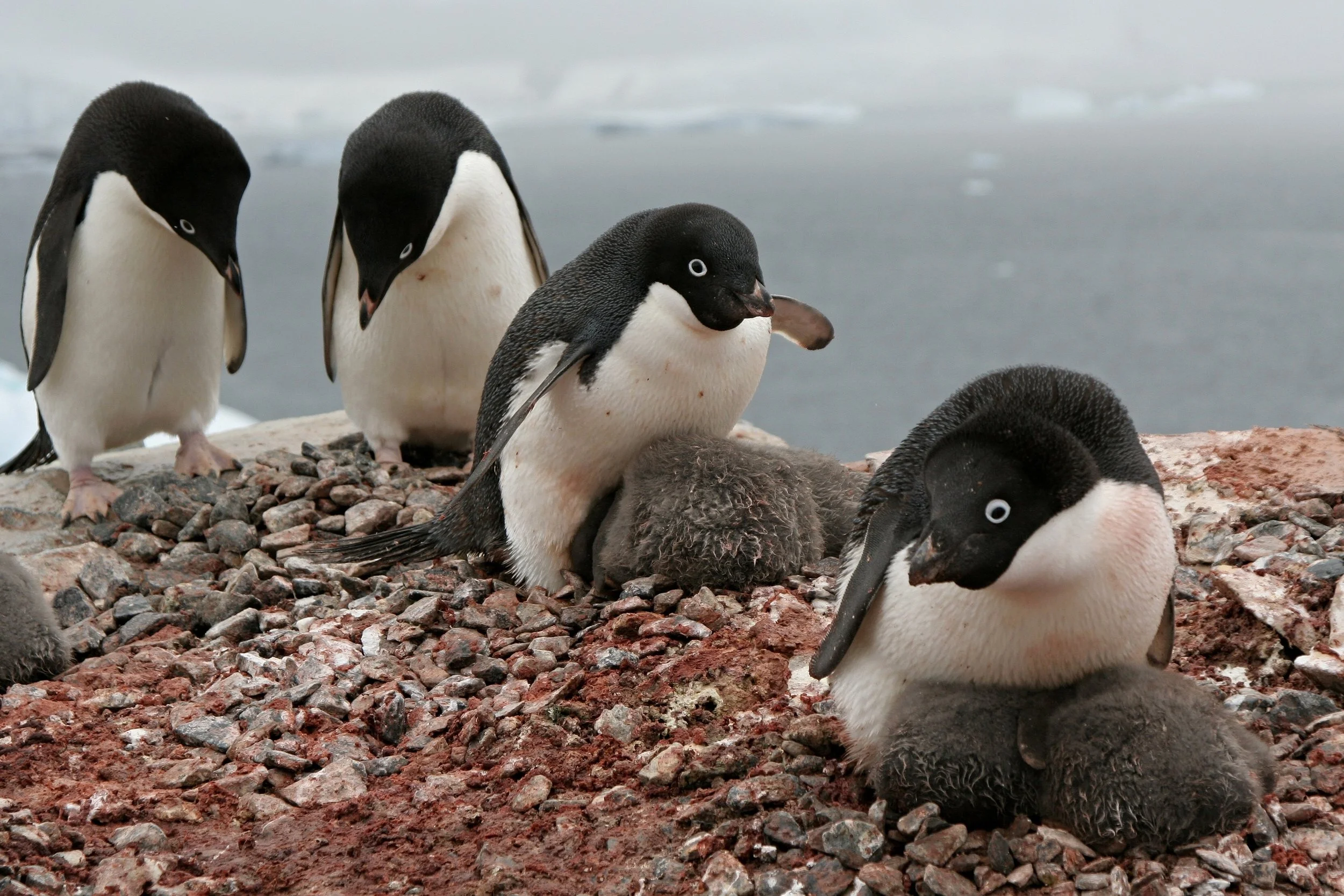
A new study published in Polar Biology by Juáres et al. (2026) provides critical GPS tracking data for Adélie and Gentoo penguins at Stranger Point (South Shetland Islands), offering robust scientific validation for the Association of Responsible Krill harvesting companies (ARK) Voluntary Restricted Zones (VRZs). The research reveals that during the critical chick-guarding stage, both species forage almost exclusively within coastal waters. Adélie penguins were found to travel a maximum distance of only 20.8 km from the colony, while Gentoo penguins reached a maximum of 28.6 km. These findings confirm the spatial accuracy of ARK’s commitment, demonstrating that the 40 km buffer zones effectively encompass and protect the core foraging grounds of these populations during the breeding season.
Ecosystem Dynamics: Summer Abundance vs. Winter Challenges
The study also provides vital context regarding population drivers in the region. Despite contrasting trends—declining Adélie populations versus rising Gentoo numbers—data indicates no evidence of food scarcity during the summer breeding season. Both species showed significant overlap in foraging areas and enjoyed high breeding success, with trip parameters remaining stable as the season progressed. This stability suggests that krill availability is not a limiting factor during the summer, supporting the hypothesis that the decline of ice-dependent Adélie penguins is driven by environmental conditions outside the breeding season, rather than fishery competition.
Decoupling Fishery Impacts from Population Trends
Broader regional analysis further distinguishes fishery activity from demographic declines, highlighting a clear spatiotemporal mismatch between harvesting operations and Adélie penguin distribution.
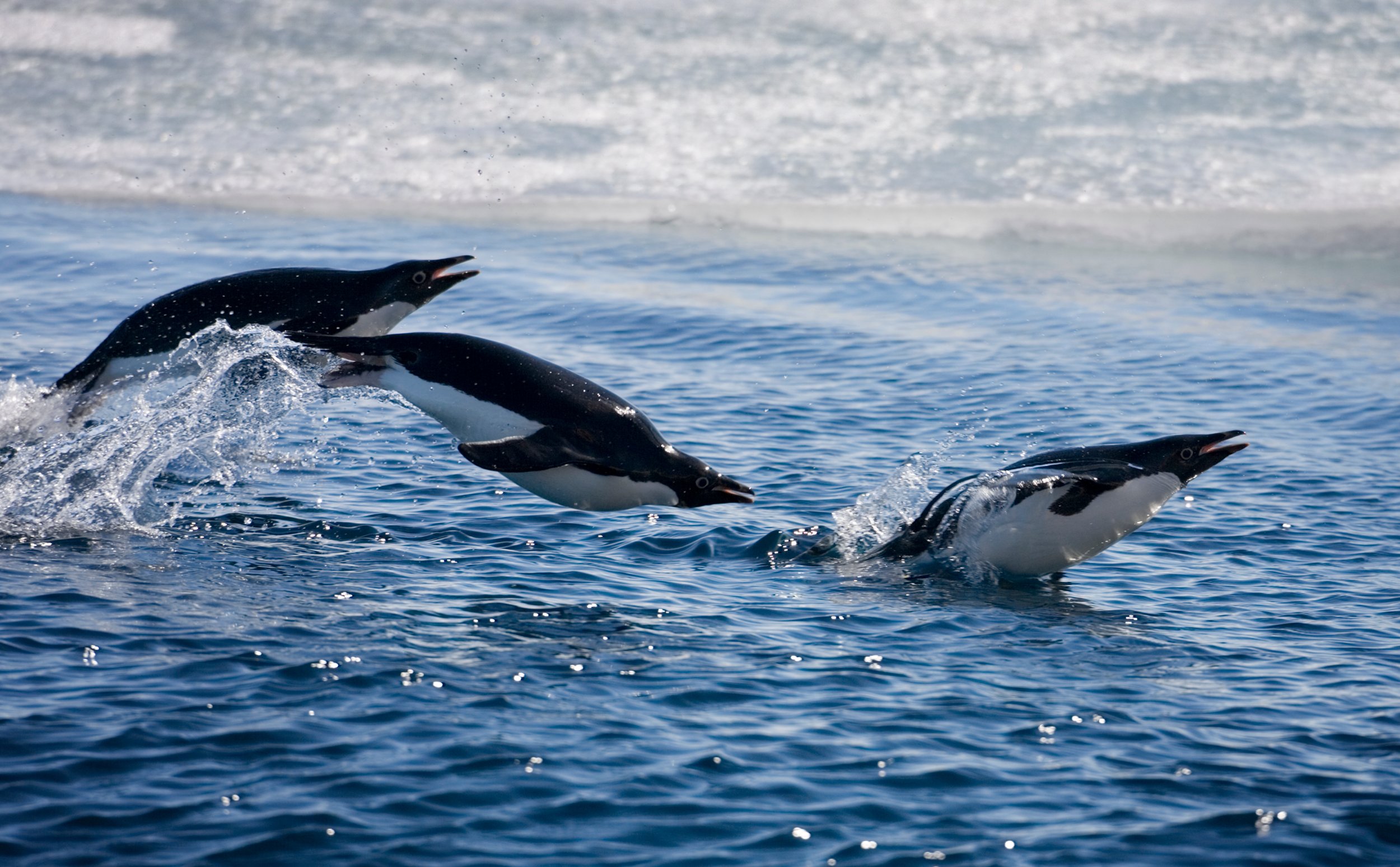
Historical Trends: The steepest declines in Adélie breeding pairs at colonies like Esperanza, Potter, and Laurie Island occurred between 1995 and 2011, a period of historically low krill catches. Conversely, as catches increased post-2010, the rate of decline notably slowed, indicating an inverse relationship between fishing pressure and population loss.
Winter Separation: During the winter months, when the fishery is most active, Adélie penguins disperse away from the Bransfield Strait and into the Weddell Sea, effectively removing themselves from the primary fishing grounds.
In contrast, the Gentoo population—which remains close to the Bransfield Strait colonies and is theoretically more "exposed" to the winter fishery—is thriving.
This evidence suggests that demographic trends are likely being shaped by broader ecosystem drivers—such as winter sea-ice loss, climate variability, and potentially increased competition from recovering whale populations—rather than fishery interactions. Crucially, these findings reinforce that ARK’s seasonal and spatial management strategies are successfully avoiding competition with penguin populations during their more vulnerable stage.
References
Hinke, J.T., Cossio, A.M., Goebel, M.E., Reiss, C.S., Trivelpiece, W.Z., Watters, G.M., 2017. Identifying Risk: Concurrent Overlap of the Antarctic Krill Fishery with Krill-Dependent Predators in the Scotia Sea. PLoS ONE 12, e0170132. https://doi.org/10.1371/journal.pone.0170132
Hinke, J.T., Polito, M.J., Goebel, M.E., Jarvis, S., Reiss, C.S., Thorrold, S.R., Trivelpiece, W.Z., Watters, G.M., 2015. Spatial and isotopic niche partitioning during winter in chinstrap and Adélie penguins from the South Shetland Islands. Ecosphere 6, 1–32. https://doi.org/10.1890/ES14-00287.1
Juáres, M.A., Farace Rey, A., Matko, C., Rozas Sia, M.G., Casaux, R., Soutullo, Á., Santos, M.M., 2026. At-sea distribution of Adélie and gentoo penguins during the 2017/2018 chick-guarding stage at Stranger Point/Cabo Funes, South Shetland Islands. Polar Biol 49, 12. https://doi.org/10.1007/s00300-026-03447-4
Juáres, M.A., Silvestro, A.M., Alfonso, B.C., Santos, M.M., 2024. Long-term trends in the abundance and breeding performance in Adélie penguins: the Argentine Ecosystem Monitoring Program. Advances in Polar Science 35, 132–140. https://doi.org/10.12429/j.advps.2023.0027