
CCAMLR 2025 outlines future path built on dialogue and scientific collaboration
Recent commentary following the CCAMLR 44 annual meeting has suggested a lack of progress or an inability to reach decisions. This view does not reflect the facts. Delegates agreed on a structured plan for future work. This outcome reflects years of cooperation, open dialogue and strong scientific engagement by all Members.
CCAMLR’s consensus process is a core principle of the Antarctic Treaty. It prevents rushed decisions and ensures that conservation and rational use are considered together. Claims of an ecosystem at risk under current rules are not supported by evidence. Proposals for a moratorium ignore the legal framework under which CCAMLR operates.
Alarmist narratives have created an inaccurate sense of crisis. They have also encouraged some groups to portray themselves as enforcers. A recent Reuters report cited activists planning to directly confront the Antarctic krill fleet in the coming season. Such rhetoric directly opposes the peaceful nature of Antarctica, elevates risks, and misguides the public.
Facts matter:
• Antarctic krill is the most abundant animal on Earth, with biomass estimated between 350 and 500 million tonnes.
• CCAMLR sets a conservative catch limit of less than 1 percent of this biomass.
• The fishery operates under one of the most precautionary and science-based management systems in the world.
• Each vessel carries an independent scientific observer who records all fishing activity, catch, bycatch and compliance.
• Bycatch remains the lowest documented for any commercial trawl fishery.
• ARK members follow voluntary measures that avoid fishing near penguin colonies during breeding.
• Whale populations in the region continue to recover while the fishery operates at stable low levels.
• Krill products are a sustainable alternative to currently overfished reduction fisheries for fish meal and oil.
Portraying this industry as a threat to whales, penguins or Antarctic ecosystems ignores four decades of science reviewed and agreed by CCAMLR.
The central issue is the protection of a governance system that works. The Antarctic krill fishery demonstrates how responsible industries operate under strong oversight and reliable scientific monitoring. It offers an example of the type of cooperation that global ocean governance frameworks seek to establish.
Escalating language and threats of disruption have no place in a region dedicated to peace, science and international collaboration. They also undermine the achievements of a fishery that succeeds through transparency and multilateral management.
ARK remains committed to independent science, open reporting and continuous improvement. We invite all stakeholders, including critics, to engage through fact-based dialogue rather than conflict.
We will continue supporting CCAMLR’s conservation and rational use objectives as this management system evolves and strengthens.
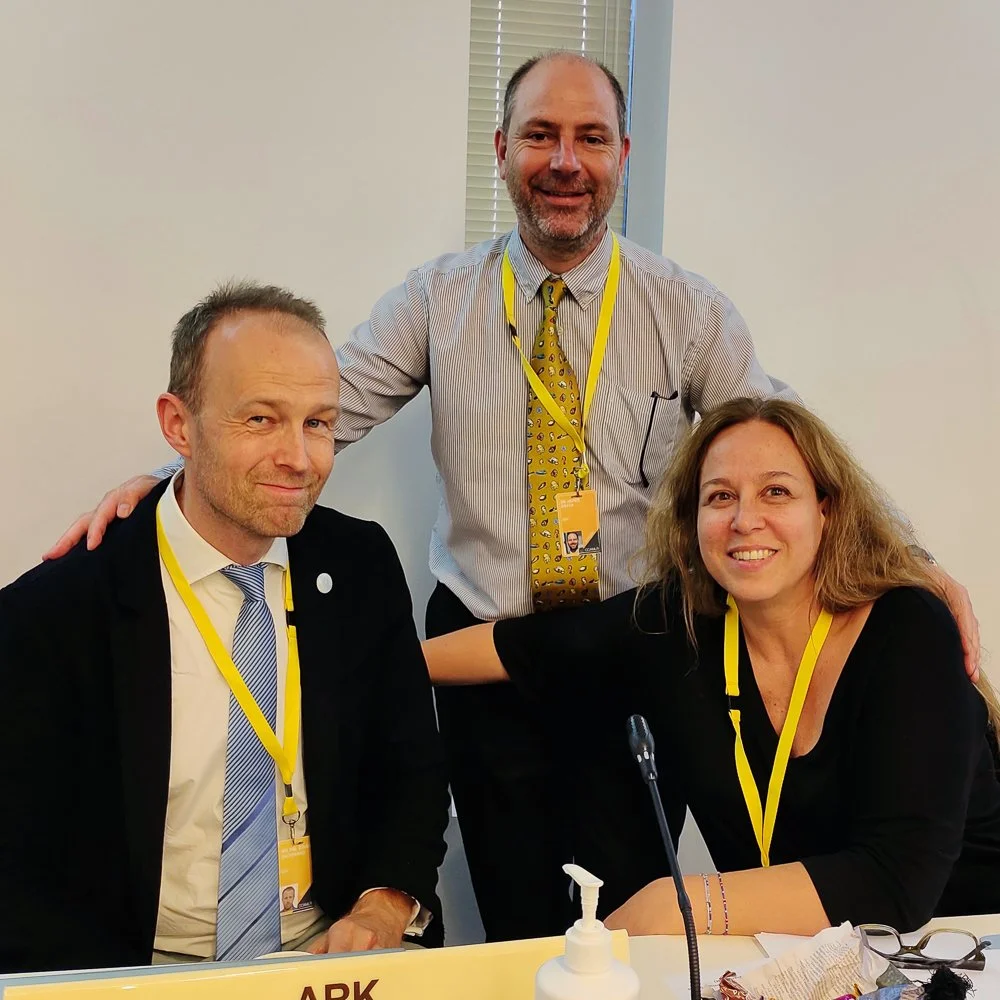
ARK team at CCAMLR annual meeting
ARK has been present at the Commission’s annual meetings in Hobart (Australia) since 2012.